
Corporate event media: build a useful delivery plan
A useful handover helps communication teams use the right material at the right time. Plan it before the event.
A seminar ending does not end the work for an agency or production team. The client still needs images for communications, selected memories for employees and sometimes material for speakers or partners. An unexplained delivery can mix these needs and leave recipients unsure what they may use.
The approach in this article treats media circulation as part of the service. It does not prescribe one universal folder structure: a multi-day congress and a team party need different albums. It provides a framework for deciding who receives what, who approves it and how the finished journey is checked.
Key takeaways
- Define audiences and approvals before creating the album structure.
- Distinguish an approved first batch from complete coverage.
- Give one person responsibility for the publication decision.
Start with recipients and their intended uses
List the actual recipients and ask what they need to do with the files. A communication team may want approved portraits and a small set of atmosphere photographs. Attendees want to explore permitted memories. A speaker may only need material from one session rather than the whole event.
Do not make permissions depend on an album name. In Galafolio, albums organise an event; use separate events when audiences require separate access. Record that decision in the brief before widely circulating links. This is easier to establish during preparation than after a recipient has received material intended for somebody else.
| Recipient | Need | Check before sending |
|---|---|---|
| Communication | Approved first batch, then full coverage | Editorial approval |
| Attendees | Browse permitted event memories | Agreed audience and downloads |
| Speaker | Material from their session | Name, version and recipient |
| Production | Sources and internal follow-up | Archive separate from the delivery gallery |
Assign responsibility for publication
Separate producing a file from authorising its distribution. A photographer may finish images while the client's manager decides which ones are immediately usable. Without a named owner, material can wait for an assumed approval or be shared before the decision has actually been made.
Write a short sequence: prepare, check, approve, publish and send the link. Decide who covers for an unavailable approver. Studio roles should reflect the people managing the work. A client receiving an event gallery does not need management access to every event your business handles.
Deliver useful batches without publishing unfinished work
An approved first batch can be more useful than a complete report delivered too late, provided its scope is clearly identified. Agree its contents and timing with the client. Do not promise immediate availability when the team or venue connection cannot support that commitment.
Distinguish ready-to-use highlights, other approved photographs and the final film. A provisional clip should not be mistaken for the finished delivery. When adding a batch, tell the recipient what changed rather than making them search a gallery that has been silently reorganised. Keep the delivery naming stable whenever possible.
Name albums using the programme's language
Use terms the client recognises: conference, workshops, networking or evening reception. For several days, choose a consistent organising rule instead of switching unpredictably between dates, room names and media types. Proofread personal and organisation names before publication.
The structure should help somebody who has never seen the production folders. Can a communication manager find a particular talk without opening every album? A short, accurate name usually works better than promotional wording that obscures what is inside. If similar sessions share a title, include the date or room to distinguish them.
Check recordings as separate deliverables
A mixed-media gallery simplifies browsing but does not replace checks appropriate to each file. Listen to messages or recordings and inspect the beginning, middle and end of videos. Confirm the version, intelligible sound and the absence of an accidental test title. A correct thumbnail proves little about the finished recording.
Galafolio presents prepared files. It does not turn a recording into a live video broadcast or automatically produce captions and transcripts. If those deliverables belong in the brief, schedule their production and approval separately. Then test how the final material plays in the browsers your recipients are expected to use.
Send a short explanation with the gallery link
The handover email should identify available content, album structure, access method, permitted downloads and availability period. Name a contact for questions. Avoid instructions about features the recipient does not need; the message should make their next action easier rather than describe the entire management interface.
Finally, open the visitor link without your studio session. Test permitted entry, the expected refusal for incorrect access details and a sample download when enabled. Preserve sources and exports in a separate archive. A gallery presents and transfers material; it does not replace an agreed retention process.
- The intended audience matches the link being sent.
- Only approved files are visible.
- Films and audio play on a phone.
- Download instructions match the settings.
- Recipients know the availability period and support contact.
Put the method into practice
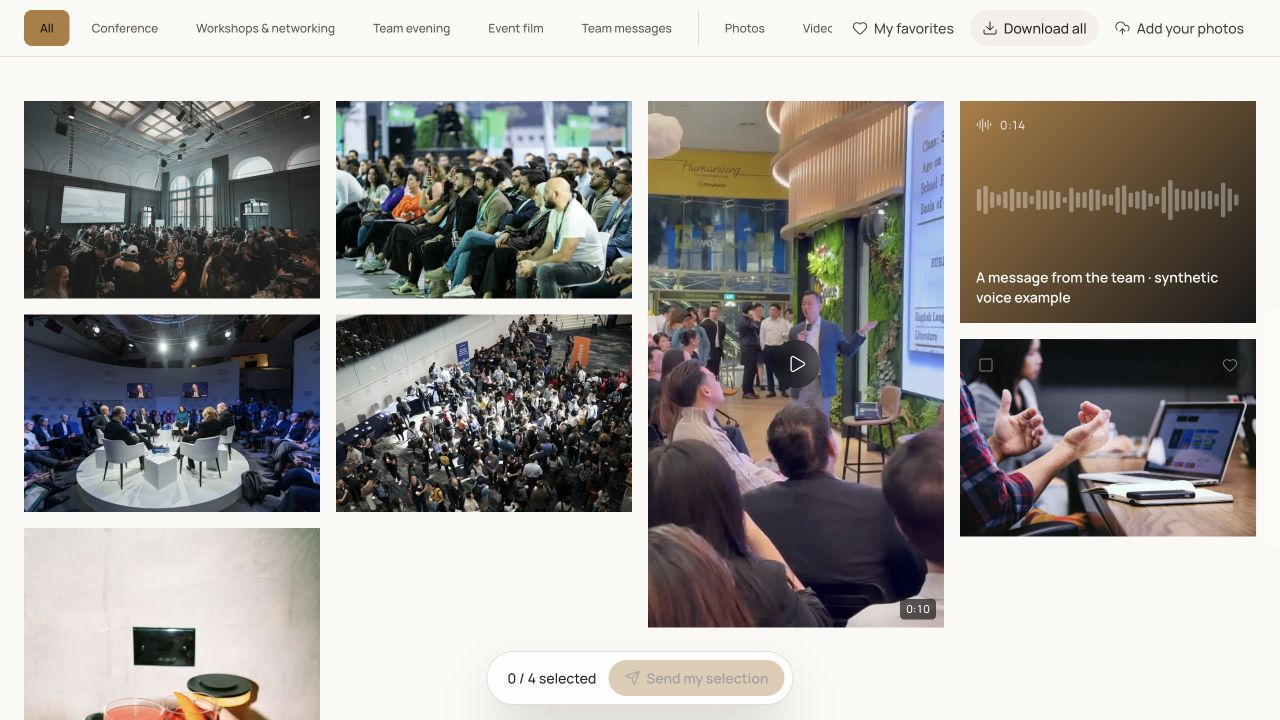
Galafolio's corporate demonstration shows an illustrative event with conference coverage, conversations, a film and an audio message. Use it to examine the visitor experience, then adapt albums and access to a real service rather than copying the example unchanged.
The central agreement remains simple: an identified audience, reviewed contents and a named person responsible for publication. That framework makes the delivery clearer for both the communication team and the people producing its media.
Common questions
Does every audience need a separate gallery?
Use separate events when permissions need to differ. An album organises media but does not by itself create a separate permission boundary.
Can a film follow the photographs later?
Yes. Explain that delivery is happening in batches, publish a checked final export and tell the client what has been added.
Does the live photo wall replace conference video broadcasting?
No. It displays visible event media. A live video broadcast needs a different production and distribution setup.